How to Choose the Right Motor Controller for Your Project?
Choosing the right Motor Controller for your project can be daunting. An esteemed expert in the field, Dr. Emily Chen, emphasizes, “A Motor Controller is crucial. The wrong choice can derail your entire project.” Understanding the significance of this component is essential for success.
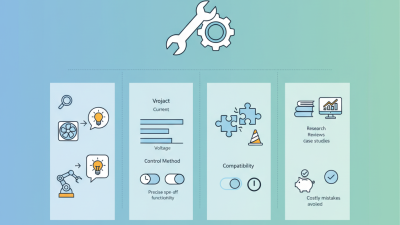
Motor Controllers directly influence how motors behave. They determine speed, torque, and efficiency. Selecting an optimal Motor Controller can be tricky. Many factors come into play, such as voltage, current ratings, and communication protocols. Ignoring these can lead to inefficiencies. Also, some controllers might not suit your specific motor type.
Consider the project's unique requirements openly. Different applications may need distinct control strategies. As Dr. Chen notes, the choice should reflect both technical needs and desired user interaction. Don’t rush this decision; it’s foundational to your project's performance and reliability. A well-chosen Motor Controller can elevate functionality, while a poor selection may complicate things. Reflect on these considerations to enhance your project's success.
Understanding the Basics of Motor Controllers
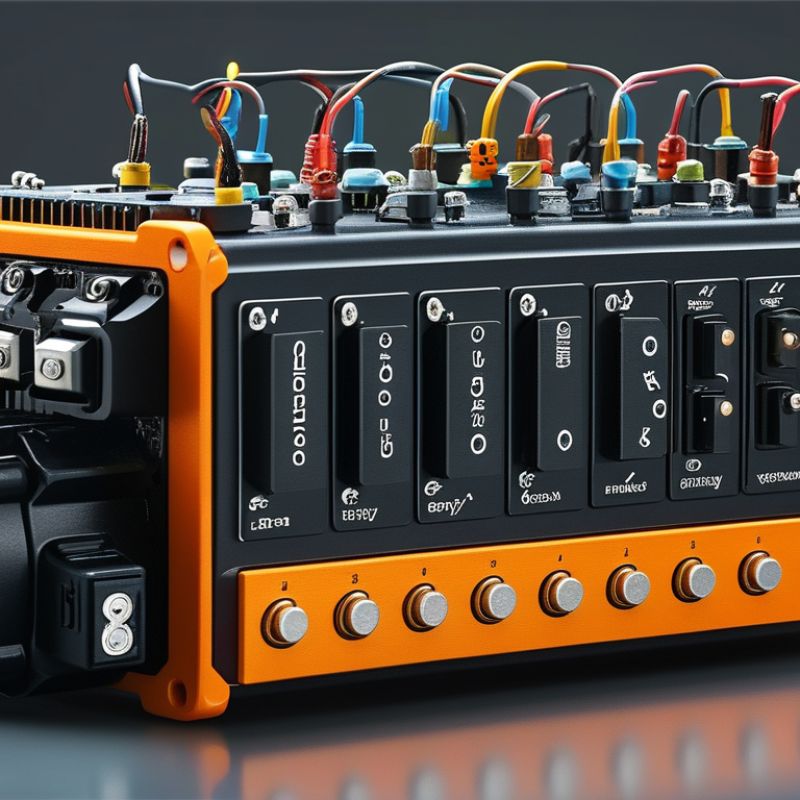
When working on robotics or automation projects, understanding motor controllers is essential. A motor controller regulates power delivery to a motor, influencing speed and torque. This electronic device ensures that motors operate efficiently, which is vital for performance. Many projects require specific characteristics, and choosing the wrong controller can lead to inefficiencies or failures.
Motor controllers can vary in complexity. Some are simple on-off switches, while others provide advanced features like PWM (Pulse Width Modulation) control. PWM enhances efficiency, allowing precise speed adjustments. However, not every project needs intricate control. For basic applications, lower-cost options might suffice. It is crucial to assess each project’s requirements before deciding.
One common oversight is neglecting heat dissipation. Motors generate heat during operation, and controllers need adequate cooling. If ignored, overheating can damage components. Another aspect to consider is voltage compatibility. Mismatched voltage can lead to subpar performance. Therefore, it is vital to carefully review specifications and not rush to conclusions. Taking time to evaluate these factors can save headaches down the line.
Identifying Different Types of Motor Controllers
Choosing the right motor controller is crucial for any project involving motors. Different types of motor controllers vary in functionality and application. Understanding these types can be a game changer.
There are three main categories: DC motor controllers, stepper motor controllers, and servo motor controllers.
DC motor controllers are used for simple applications with basic speed control. They typically feature an H-bridge setup for direction control. Stepper motor controllers allow precise control over position and speed, making them ideal for robotics. Servo motor controllers provide feedback and position control, offering higher accuracy for complex tasks.
When selecting a motor controller, consider the project's requirements. Ask yourself:
What type of motor are you using?
What level of control do you need? Take time to research the
specifications.
Tips: Validate power ratings before making a decision. Ensure the controller can handle the motor’s voltage and current requirements. Compatibility is essential for performance and longevity. Lastly, don't overlook the need for cooling solutions in high-power applications.
Assessing Your Project Requirements and Specifications
Choosing the right motor controller begins with understanding your project's unique requirements. Start by assessing the type of motor you will use. Brushless DC (BLDC) motors demand precise control for optimal performance. A study from the International Journal of Electrical Engineering reveals that nearly 40% of industrial projects utilize these motors due to their efficiency. Understanding torque and speed specifications for your project is essential. If you require high torque at low speeds, a different controller is necessary than for high-speed applications.
Next, consider the power supply characteristics. Voltage ratings and current requirements significantly impact controller selection. It's crucial to match these specifications to ensure reliable operation. The Electric Power Research Institute indicates that mismatched power ratings contribute to over 70% of failure cases in motor control systems. So, pay close attention to these details.
Lastly, think about the control interface needed. Some projects might benefit from advanced features like field-oriented control. But for simpler applications, basic PWM control could suffice. Keep in mind that overcomplicating your setup may introduce vulnerabilities. Reflecting on potential pitfalls ensures a robust design.
How to Choose the Right Motor Controller for Your Project?
| Criteria |
Description |
Example Values |
| Voltage Rating |
The operating voltage range for the motor controller |
12V - 48V |
| Current Rating |
Maximum continuous current the controller can handle |
10A - 30A |
| Control Method |
How the controller manages the motor, e.g., PWM, Linear |
PWM Control |
| Feedback Type |
Type of feedback used for control, such as encoders or sensors |
Quadrature Encoder |
| Size and Form Factor |
Physical dimensions and mounting options of the controller |
Compact; 3"x3" |
| Operating Temperature |
Temperature range in which the controller can operate safely |
-20°C to 70°C |
| Protection Features |
Safety features like thermal shutdown, overvoltage protection |
Short Circuit Protection |
| Connectivity Options |
Methods for connecting to a microcontroller or PC |
UART, I2C, CAN |
Evaluating Features and Compatibility of Motor Controllers
Choosing the right motor controller involves careful evaluation of features and compatibility. Begin by considering the type of motor you are using. Different motors require different controllers. For example, DC motors need simple controllers, while stepper motors often call for more complex systems. Look for controllers that match your motor specifications.
Compatibility is crucial in your selection process. Ensure the voltage and current ratings align with your project needs. Check the control signal requirements, too. Some controllers may need PWM signals, while others use analog inputs. If you overlook these details, the system might not work efficiently.
Evaluate the additional features available with each controller. Some might offer built-in protection against overheating or overcurrent, which can save you from potential damage. However, unnecessary features can complicate usage. Reflect on your project goals. Do you need advanced functionalities, or is a basic controller sufficient? Prioritizing essential aspects and filtering out noise can enhance your decision-making process.
Making the Final Decision: Testing and Implementation
When selecting a motor controller, testing and implementation are crucial steps. Before finalizing your choice, create a test environment. This setup should replicate your project's conditions as closely as possible. Use a similar power supply, load, and motor type. This helps in assessing real-world performance.
Some tips: Check for temperature changes during operation. Excess heat can indicate inefficiency or overload. Monitor the controller's response to varying loads. A reliable controller should adapt seamlessly without unnecessary delays. If performance dips, re-evaluate your choice.
Documentation is essential. Thoroughly read the user manual and datasheets. They contain vital information about limits and proper usage. If issues arise during testing, don't hesitate to consult online forums or communities. Engaging with others can provide insights you may not have considered. Remember, reflection on your results is key to improvement.
Motor Controller Performance Comparison