Top Benefits of Using DC Motor BLDC for Your Projects?
In the rapidly evolving world of engineering, the use of DC Motor BLDC technology has become increasingly prevalent. Experts like Dr. Alex Turner, a well-respected figure in the field, assert, “DC Motor BLDC systems can revolutionize efficiency in many applications.” This statement highlights the transformative potential of these motors.
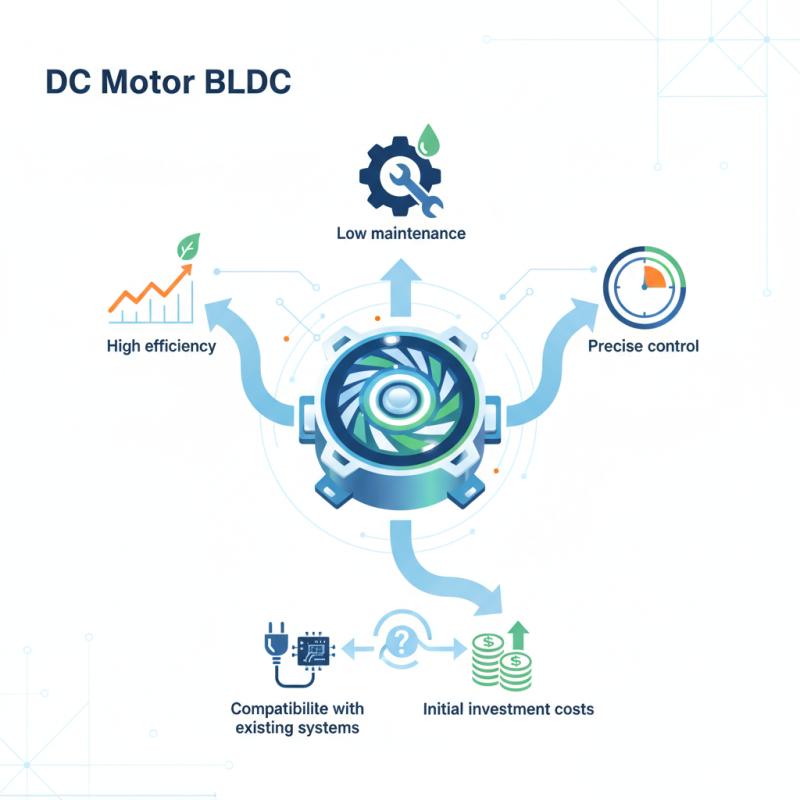
With their unique characteristics, DC Motor BLDC models provide significant advantages, such as high efficiency, low maintenance, and precise control. Their design eliminates the brushes found in traditional motors, resulting in less energy loss. This innovation not only boosts performance but also ensures longevity.
However, the integration of this technology is not without challenges. Engineers must carefully consider compatibility with existing systems and the initial investment costs. By approaching these factors thoughtfully, you can fully harness the benefits of DC Motor BLDC systems for your projects. Embracing this technology may require a shift in mindset, but the positive outcomes can be substantial.
Advantages of Brushless DC Motors in Modern Applications
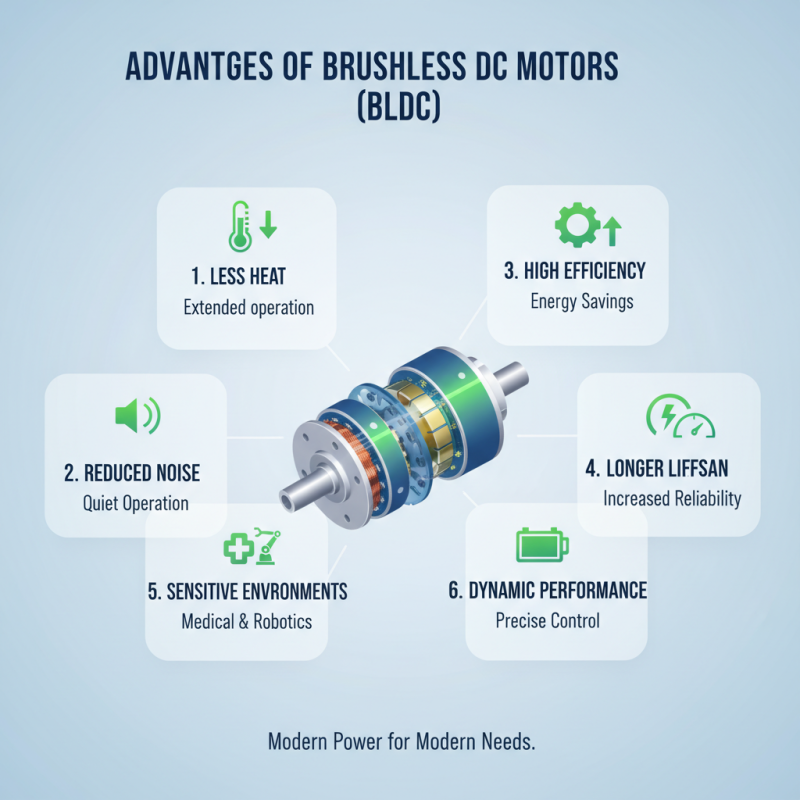
Brushless DC motors (BLDC) have gained significant popularity in modern applications due to their impressive performance characteristics. These motors produce less heat and noise compared to traditional brushed motors. This makes them ideal for sensitive environments like medical devices and robotics. A BLDC motor can operate for long periods without overheating, which enhances reliability in various applications.
Another advantage of brushless DC motors is their efficiency. They offer higher torque at lower speeds, which enables energy savings. Many industries, from automotive to aerospace, benefit from this efficiency. However, integrating BLDC motors can be challenging. Proper controller selection and tuning are essential for optimal performance. Without these considerations, projects may face operational issues.
Furthermore, BLDC motors often have a longer lifespan than their brushed counterparts. The absence of brushes reduces wear and tear, making them more durable. Yet, while they require less maintenance, the initial setup cost can be higher. This is a crucial aspect to weigh during project planning. Balancing upfront investment with long-term benefits is essential in decision-making.
Enhanced Efficiency of BLDC Motors Compared to Traditional Motors
BLDC motors stand out for their enhanced efficiency compared to traditional motors. These motors use a rotating magnetic field, which minimizes energy loss. Unlike brushed motors, BLDC designs eliminate friction due to the absence of brushes. This leads to less heat generation and allows for more stable operation, particularly in demanding applications.
When you look at power consumption, BLDC motors use a sophisticated electronic control system. This system optimizes performance, adjusting the power input based on load requirements. As a result, efficiency can reach up to 90% or more in some cases. This high efficiency translates to reduced electricity costs and longer operational lifespans.
There are challenges, however. The initial investment for a BLDC motor can be higher than for traditional options. Power suppliers may also require user training to handle the advanced controls. Despite these hurdles, the long-term operational benefits often outweigh drawbacks. Industries are increasingly exploring the potential of these motors for various applications, pushing towards sustainable practices and reducing carbon footprints.
Reduced Maintenance and Longevity Benefits of BLDC Motors
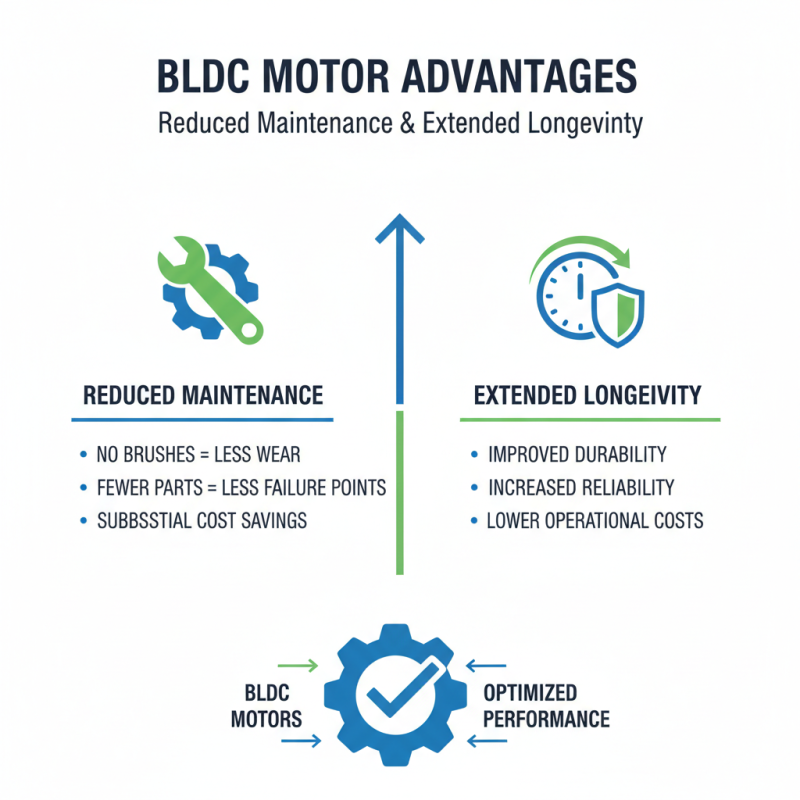
BLDC motors, or Brushless DC motors, offer significant advantages in maintenance and longevity. Without brushes, these motors face less wear and tear. This simplicity improves durability. Fewer parts mean less that can fail. Over time, users notice a substantial reduction in maintenance needs. This can translate to lower operational costs for businesses and projects.
In practical terms, the longevity of BLDC motors makes them perfect for applications requiring high reliability. Think of robotics and automation. These fields demand components that endure over time. BLDC motors fulfill this need with impressive efficiency. Regular checks on wiring and connections, however, are essential. This ensures they operate at peak performance.
Tip: Whenever you work with BLDC motors, consider their cooling requirements. Adequate ventilation can boost their lifespan even more. Additionally, ensuring a clean operating environment will help maintain efficiency. Remember that neglecting these factors may diminish their advantages.
Versatility of BLDC Motors in Various Industrial Projects
When considering industrial projects, the versatility of Brushless DC (BLDC) motors stands out. These motors excel in a wide range of applications, from robotics to HVAC systems. Their efficient design allows for high torque and speed control, making them ideal for precise tasks. Many engineers choose BLDC motors for automation projects due to their reliability and performance.
Moreover, BLDC motors come with fewer maintenance needs. Unlike brushed motors, they avoid wear from friction. This reduces downtime in industrial setups. However, they can be complex, requiring specialized knowledge for integration. This complexity might deter some teams, but the long-term benefits often outweigh the initial challenges. Additionally, the cost of controllers and drivers can be a hurdle, yet many find the investment worthwhile.
In various environments, the adaptability of BLDC motors makes them highly valuable. From clean rooms to outdoor machinery, they maintain performance across conditions. However, choosing the right motor must consider the specific project needs. Engineers must weigh the benefits against potential limitations. This thoughtful approach ensures optimal outcomes in diverse applications.
Top Benefits of Using DC Motor BLDC for Your Projects
| Benefit |
Description |
Application |
| High Efficiency |
BLDC motors have higher efficiency compared to traditional motors, leading to lower power consumption. |
Consumer Appliances, Robotics |
| Long Lifespan |
Due to the absence of brushes, BLDC motors have a longer operational lifespan and reduced maintenance. |
Automotive, HVAC Systems |
| Compact Size |
BLDC motors are generally more compact than AC motors, making them suitable for space-constrained applications. |
Drones, Aerospace |
| Low Noise Operation |
BLDC motors operate more quietly than traditional motors, which is beneficial in noise-sensitive environments. |
Medical Devices, Office Equipment |
| Precise Control |
BLDC motors provide excellent speed and torque control, allowing for precise operation in various applications. |
CNC Machines, Robotics |
| High Torque at Low Speed |
BLDC motors can deliver more torque at lower speeds, which is crucial for applications requiring high-starting torque. |
Conveyor Systems, Industrial Automation |
Applications of BLDC Motors in Robotics and Automation
BLDC motors have become a popular choice in robotics and automation. Their efficiency and compact design make them ideal for various applications. In robotics, these motors are often used in robotic arms, drones, and autonomous vehicles. Their precise control allows for accurate movements, essential for tasks requiring high levels of precision.
The automation industry also benefits from BLDC motors. These motors are widely used in conveyor systems, automated assembly lines, and robotic process automation. Their ability to provide consistent torque at different speeds ensures smooth operation in various applications. However, integrating BLDC motors into existing systems can be challenging. Compatibility issues may arise, requiring modifications in design and control systems.
Understanding the dynamics of BLDC motors is crucial for effective application. Engineers need to consider factors like load requirements and power supply needs. While BLDC motors offer many advantages, they may not be suitable for every project. Careful analysis and planning are essential to maximize their potential.
Top Benefits of Using DC Motor BLDC for Your Projects
BLDC (Brushless DC) motors are highly efficient and widely used in robotics and automation. The following chart illustrates the key benefits of using BLDC motors in various applications.