How to Choose Dc Motors With Encoders for Your Applications?
Choosing the right DC motors with encoders can significantly impact your project's success. These components are crucial for applications requiring precise motion control. The integration of encoders with DC motors offers enhanced feedback for position and speed. This combination allows for improved accuracy and efficiency in various systems.
When selecting DC motors with encoders, understanding your specific needs is essential. Consider factors such as load requirements and environmental conditions. Different applications demand distinct motor specifications. A thorough analysis of these elements can prevent costly mistakes down the line. It’s easy to overlook these details, but they play a vital role in overall performance.
Moreover, not all DC motors with encoders are created equal. Variations in quality and functionality exist among manufacturers. Conducting in-depth research can narrow down the options best suited for your application. Seek reliable sources and reviews to guide your decision. A well-informed choice fosters confidence in performance, but it’s important to remain open to adjustments. The learning process never truly ends, and adaptability can enhance results.
Understanding the Basics of DC Motors with Encoders
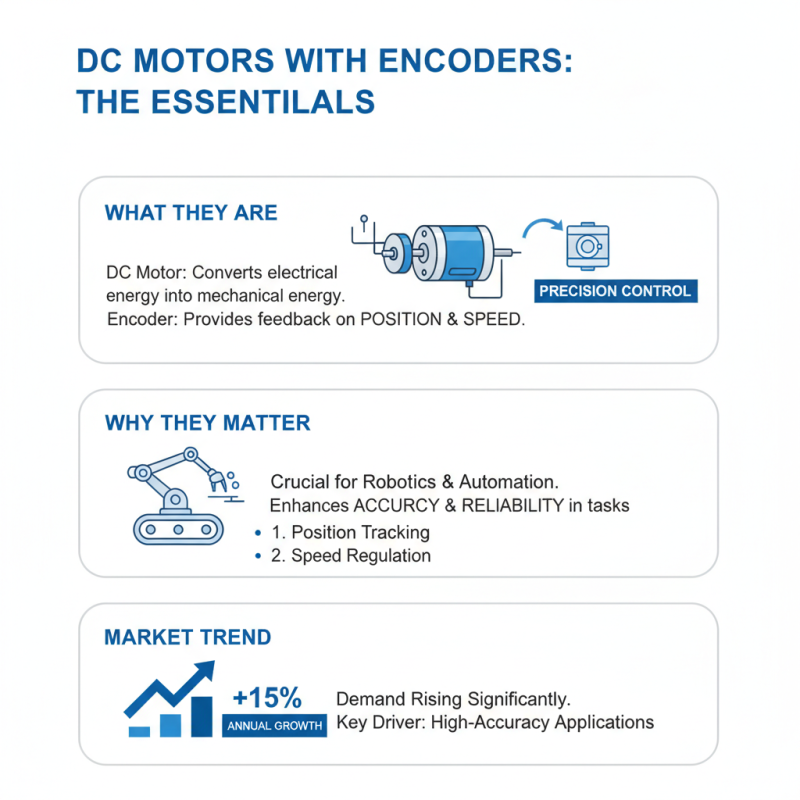
DC motors with encoders are crucial in various applications, including robotics and automation. Understanding their basics is key for effective selection. Encoders provide feedback on the motor's position and speed. This data enhances precision in controls, which is vital for tasks requiring high accuracy. According to industry reports, the demand for DC motors with encoders has grown significantly, rising by 15% annually.
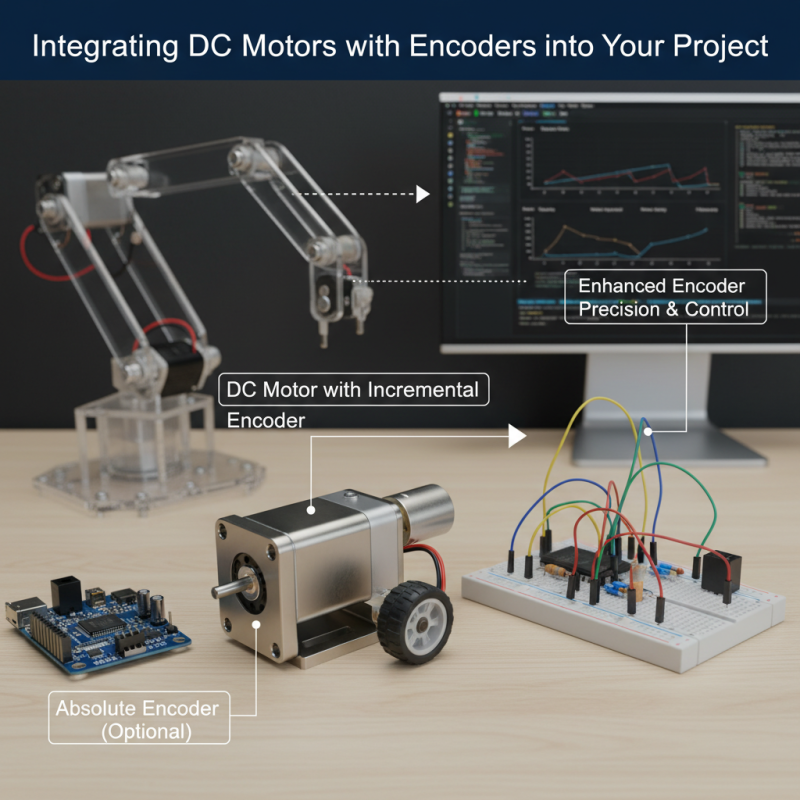
When selecting a DC motor with an encoder, consider the type of encoder you need. There are incremental and absolute encoders, each with distinct advantages. Incremental encoders track movement and give relative position. Absolute encoders provide a specific position, which is valuable for applications where power loss may occur. According to a recent study by the International Society of Automation, nearly 30% of companies report errors due to incorrect encoder types.
Another factor is torque and speed requirements. A motor may have ample speed but insufficient torque for specific tasks. Users often underestimate the torque required for their applications. Performance can weaken if the motor isn't matched correctly to load specifications. Moreover, environmental factors can affect motor performance, adding complexity. Selecting the right components ensures reliability in critical applications.
Identifying Your Application Requirements for DC Motors
When selecting DC motors with encoders, understanding your application requirements is crucial. Different applications demand varying specifications, making it essential to identify the specific needs. For example, industrial automation may require high precision and responsiveness. Meanwhile, robotics may focus on durability and torque. The market research firm MarketsandMarkets has projected the global DC motor market will reach USD 22.57 billion by 2026, indicating robust growth and increasing demand.
Consider the environment where the motor will operate. Harsh industrial settings might necessitate motors with enhanced protective features. Conversely, applications in clean rooms may prioritize lower emission motors. Research from Strategies Unlimited highlights that motors operating in high temperatures can lose efficiency over time.
Tips: Always evaluate the size and weight of the motor relative to your application. Reducing footprint can lead to better overall performance. Look into whether a lower RPM would suffice for your task while ensuring energy efficiency. Also, consider the software compatibility for your encoders to ensure smooth integration with your existing systems.
DC Motors with Encoders: Application Requirements
Evaluating Different Types of Encoders for DC Motors
When selecting DC motors with encoders, understanding the types of encoders is essential. Encoders are vital for providing feedback on the motor's position, speed, and direction. Two common types are incremental and absolute encoders. Incremental encoders track position changes and provide relative data. They are often used in applications where the motor's position can be reset. Absolute encoders give a unique value for each position, maintaining position information even after power loss. This feature is crucial for applications requiring precise location data.
Consider the resolution needed for your application. High-resolution encoders deliver more precise measurements, but they can be more complex. Be mindful of how your application's demands match the encoder’s capabilities. An encoder that is too high-resolution can complicate control systems unnecessarily. It's important to balance complexity with the needs of your task.
Tips: Always check compatibility with your motor. A mismatch can lead to performance issues. Test various encoders under real operating conditions. This can reveal unexpected challenges. Evaluate your choices based on reliability and ease of integration. Keep in mind that the best encoder for one application may not suit another.
Choosing the Right Specifications for Your DC Motor System
Choosing the right specifications for your DC motor system is crucial for optimal performance. The primary considerations include voltage, current, and speed. Different applications require varying voltages, typically ranging from 6V to 48V. It's essential to match the motor voltage to your power supply. Otherwise, you may encounter efficiency issues or potential damage.
Current ratings are equally important. A motor with too low a current rating can overheat. This may lead to burnout or mechanical failure. Consider the operating conditions of your application. Are there frequent starts and stops? This factor can affect current draw significantly. Understanding your load requirements will guide you toward suitable current specifications.
Speed and torque characteristics define how the motor will perform in real-world scenarios. Higher speeds may be tempting, but they often result in reduced torque. This balance is vital. Also, keep in mind that encoders add precision but increase the complexity of the system. Ensure you have the expertise to integrate and calibrate these components properly. Reflecting on your specific needs can prevent costly mistakes.